How Often Should Trees Be Trimmed?
How often a tree should be trimmed depends on the tree itself and why it needs pruning. Young trees, mature trees, fast-growing trees, and trees with damaged or overgrown branches may all have different maintenance needs.
Rather than trimming a tree simply because a certain amount of time has passed, it is better to inspect the tree and determine whether pruning is actually needed. Proper pruning can help maintain tree health, structure, appearance, and safety.
How Often Should You Trim a Tree?
There is no single trimming schedule that applies to every tree.
A professional may recommend pruning based on:
- Tree species
- Tree age and size
- Growth rate
- Overall health
- Branch structure
- Dead or damaged limbs
- Proximity to buildings and driveways
- Clearance requirements
- Previous pruning
- Storm damage
- The purpose of the pruning
Healthy mature trees may only need occasional maintenance, while trees with structural problems or damaged branches may need attention sooner.
How Often Should Young Trees Be Trimmed?
Young trees can benefit from occasional corrective pruning as they develop.
The goal is usually to encourage a strong structure and address problems before branches become large. ISA recommends addressing structural issues gradually rather than making major corrective cuts all at once.
Young trees generally require lighter pruning than mature trees. Removing small problem branches early can help reduce the need for larger cuts later.
How Often Should Mature Trees Be Trimmed?
Mature trees should be inspected regularly, but they do not necessarily need heavy trimming every year.
Pruning may be appropriate when a mature tree develops:
- Dead branches
- Broken limbs
- Diseased branches
- Weakly attached branches
- Branches interfering with structures
- Excessive or problematic growth
- Clearance problems
ISA recommends routine care for mature trees, including pruning when dictated by the tree’s structure and seasonal considerations.
Can Trees Be Trimmed in Spring?
Yes, but spring pruning depends on the tree and the type of work being performed.
Trees that bloom in spring may have flower buds formed during the previous growing season. Pruning them before they bloom can remove those buds. NC State Extension recommends pruning many spring-flowering plants soon after flowering if maintaining maximum bloom is the goal.
Spring can also be appropriate for certain light corrective pruning and species-specific maintenance.
The important point is to identify the tree before deciding when to prune it.
Is Summer a Good Time to Trim Trees?
Light pruning can sometimes be performed during summer, but heavy pruning during hot, dry weather should generally be avoided.
NC State Extension recommends caution with heavy summer pruning, particularly during hot or dry conditions.
Summer pruning may make sense for specific maintenance needs or certain tree species, but it should be based on the tree’s condition and the objective of the pruning.
Should You Trim Trees in the Fall?
Fall is not automatically the best time to prune trees in North Carolina.
Pruning at the wrong point in the season can encourage new growth that may not have enough time to mature before colder weather. NC State Extension also recommends limiting late-summer and early-fall pruning for some trees because of these concerns.
Because fall timing varies by species, homeowners should avoid assuming that every tree should be trimmed after the leaves begin to change.
What About Spring-Flowering Trees?
Spring-flowering trees often require special consideration.
If a tree produces flowers in early spring, pruning before flowering can remove buds that developed during the previous season. For these trees, pruning shortly after flowering may be preferable when the goal is to preserve the next bloom cycle.
The exact timing depends on the species.
What About Summer-Flowering Trees?
Summer-flowering trees and plants often respond differently from spring bloomers.
Some plants that flower on new growth can be pruned during late winter or early spring before new growth begins. NC State Extension gives examples such as crape myrtle among plants that can receive more extensive pruning before spring growth.
Even with these trees, excessive pruning should be avoided.
When Should Evergreen Trees Be Trimmed?
Many evergreens can be pruned in late winter or early spring before new growth begins.
NC State Extension notes that the timing of evergreen pruning is often based on the growth cycle of the particular plant. Some evergreens can also receive maintenance pruning after their seasonal growth is complete.
Because different evergreen species respond differently, it is best to identify the tree before establishing a pruning schedule.
What If a Tree Has Dead or Storm-Damaged Branches?
Dead, broken, or damaged branches may need attention regardless of the season.
NC State Extension states that dead or broken branches can be removed at any time of year.
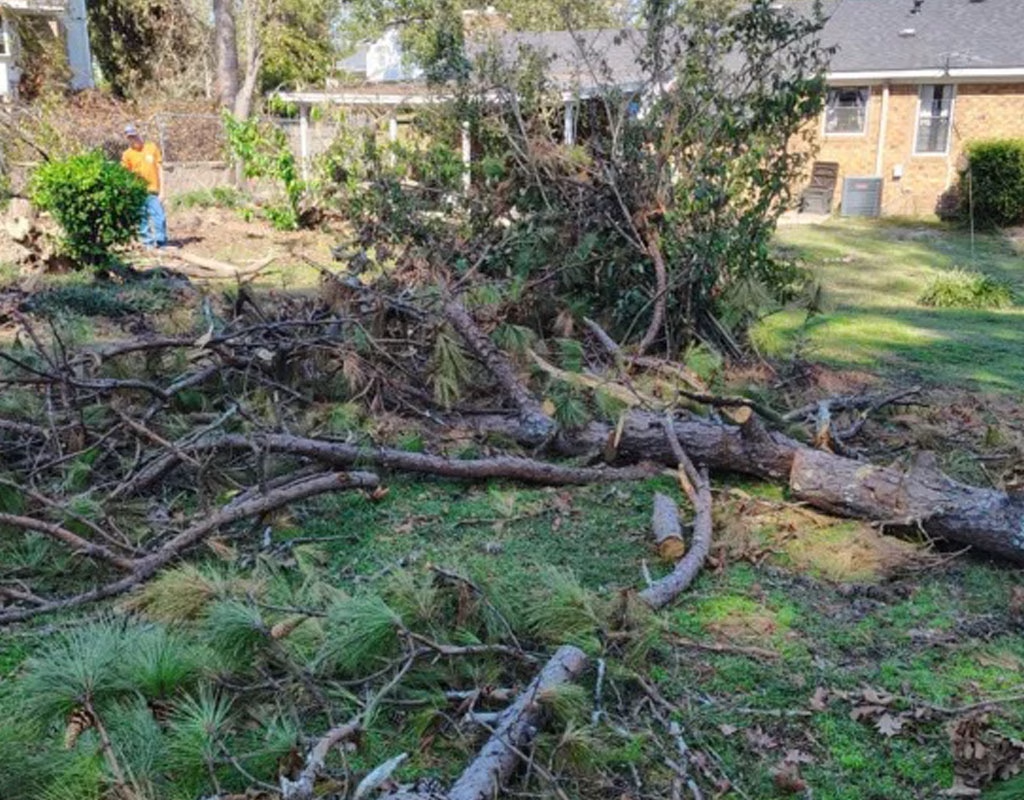
Storm-damaged trees require additional caution because broken limbs and unstable sections can create serious hazards. Large damaged branches should be evaluated by a qualified tree professional rather than handled as a DIY project.
When Should Trees in Thomasville, NC Be Trimmed?
For homeowners in Thomasville and surrounding North Carolina communities, late winter can be a useful general pruning period for many deciduous shade trees. However, the best timing depends on the particular tree.
Factors to consider include:
- Tree species
- Whether the tree flowers
- Tree age
- Tree health
- Type of pruning needed
- Recent storm damage
- Branch location
- Nearby buildings and other structures
- Seasonal weather conditions
A professional inspection can help determine whether the tree needs trimming now or whether it would be better to wait for a more appropriate pruning window.
Why Professional Tree Trimming Matters
Tree trimming involves more than simply cutting branches. Removing the wrong branches or too much of the canopy can negatively affect the tree’s structure and health.
NC State Extension recommends understanding the species, condition, and reason for pruning before making cuts and suggests contacting a certified arborist when you are unsure how a tree should be pruned.
Professional tree service can also be especially important when branches are large, high above the ground, close to buildings, or difficult to access.
Should Trees Be Trimmed Every Year?
Not necessarily.
Trees should be inspected regularly, but they do not automatically need heavy pruning every year. Pruning should have a specific purpose, such as removing damaged branches, improving structure, maintaining clearance, or addressing a particular growth problem.
Routine inspection is more important than following a rigid annual trimming schedule.
Avoid Over-Pruning and Tree Topping
More pruning is not always better for a tree.
Removing excessive amounts of the canopy can stress a tree and affect its natural structure. Tree topping, which involves cutting major limbs back to stubs, is particularly problematic and should not be used as a routine way to reduce tree height.
A professional should determine which branches actually need to be removed and how much pruning is appropriate.
Frequently Asked Questions
What is the best month to trim trees in North Carolina?
There is no single best month for every tree. For many deciduous shade trees, late winter is a good general pruning period, but flowering trees and other species may require different timing.
Can I trim my trees in the summer?
Light or species-specific pruning may be appropriate during summer, but heavy pruning during hot, dry conditions should generally be avoided.
Is fall a good time to trim trees?
Fall is not the ideal pruning season for every tree. Some trees can be more vulnerable to problems when pruning encourages new growth before cold weather. Species-specific timing is important.
Should dead branches be removed immediately?
Dead and broken branches can be removed when they are identified, regardless of the normal seasonal pruning window. Larger or hazardous branches should be handled by a qualified professional.
When should flowering trees be trimmed?
The timing depends on when the tree flowers and whether it flowers on old or new growth. Many spring-flowering trees are best pruned after flowering if preserving the next bloom is important.
When should evergreen trees be trimmed in North Carolina?
Many evergreens can be pruned in late winter or early spring before new growth begins, although the ideal timing varies by species.
Professional Tree Trimming in Thomasville, NC
Choosing the right time to trim a tree can help protect its health, structure, and appearance. Instead of following a one-size-fits-all schedule, have the tree evaluated based on its species, condition, location, and pruning needs.
B&G Tree Services & Pressure Washing provides professional tree trimming and pruning services for homeowners and businesses in Thomasville, High Point, Greensboro, Winston-Salem, Lexington, Asheboro, Salisbury, and surrounding North Carolina communities.
If your trees have dead branches, excessive growth, storm damage, or branches interfering with your property, contact B&G Tree Services & Pressure Washing to discuss the appropriate tree care solution.