How Often Should Trees Be Trimmed?
How often a tree should be trimmed depends on the tree itself and why it needs pruning. Young trees, mature trees, fast-growing trees, and trees with damaged or overgrown branches may all have different maintenance needs.
Rather than trimming a tree simply because a certain amount of time has passed, it is better to inspect the tree and determine whether pruning is actually needed. Proper pruning can help maintain tree health, structure, appearance, and safety.
How Often Should You Trim a Tree?
There is no single trimming schedule that applies to every tree.
A professional may recommend pruning based on:
- Tree species
- Tree age and size
- Growth rate
- Overall health
- Branch structure
- Dead or damaged limbs
- Proximity to buildings and driveways
- Clearance requirements
- Previous pruning
- Storm damage
- The purpose of the pruning
Healthy mature trees may only need occasional maintenance, while trees with structural problems or damaged branches may need attention sooner.
How Often Should Young Trees Be Trimmed?
Young trees can benefit from occasional corrective pruning as they develop.
The goal is usually to encourage a strong structure and address problems before branches become large. ISA recommends addressing structural issues gradually rather than making major corrective cuts all at once.
Young trees generally require lighter pruning than mature trees. Removing small problem branches early can help reduce the need for larger cuts later.
How Often Should Mature Trees Be Trimmed?
Mature trees should be inspected regularly, but they do not necessarily need heavy trimming every year.
Pruning may be appropriate when a mature tree develops:
- Dead branches
- Broken limbs
- Diseased branches
- Weakly attached branches
- Branches interfering with structures
- Excessive or problematic growth
- Clearance problems
ISA recommends routine care for mature trees, including pruning when dictated by the tree’s structure and seasonal considerations.
Can Tree Wood Be Used for Firewood?
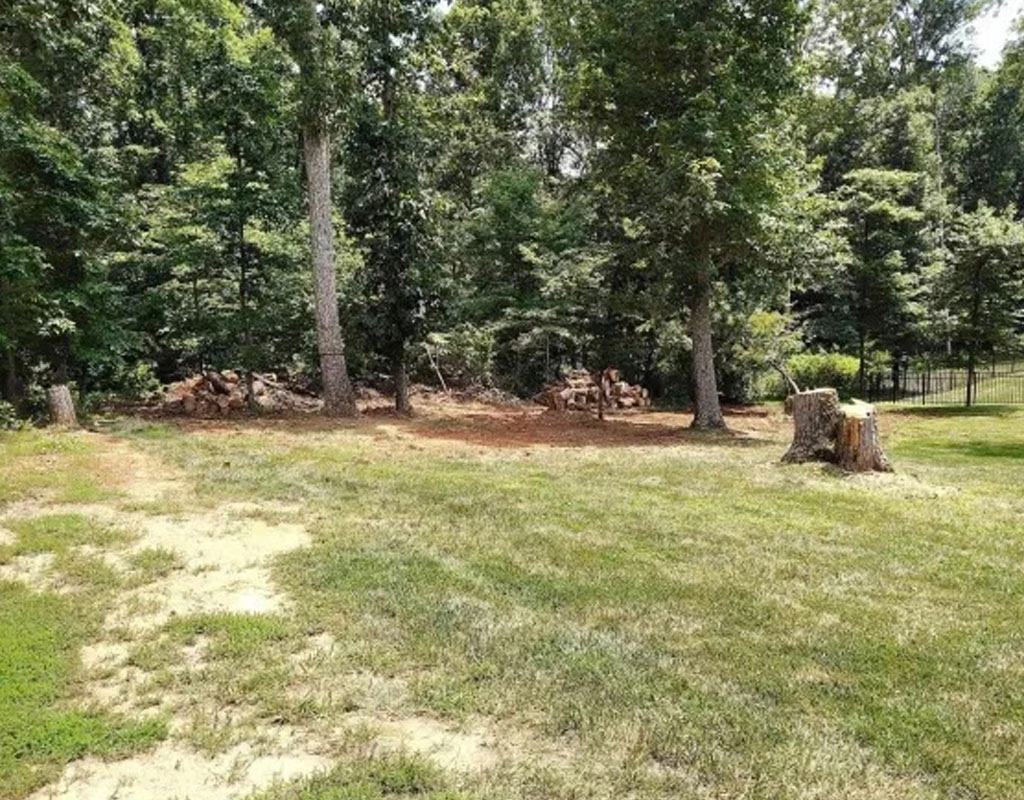
Sometimes, yes. If the wood is suitable and the homeowner wants to keep it, larger sections may be cut into manageable pieces.
However, not all tree wood is appropriate for firewood. Wood from diseased or pest-affected trees may not be something you want to store or transport. The condition of the wood also matters.
If you want to keep some of the tree after removal, discuss that with the tree service before the job begins so the crew knows which material you want to save.
What Happens to the Smaller Branches?
Smaller branches and brush are often processed differently from larger sections of trunk.
Depending on the equipment and cleanup plan, branches may be chipped or hauled away as yard debris. Chipping can reduce bulky branches into smaller material that is easier to transport or potentially use as mulch.
B&G also provides storm cleanup and debris removal for properties affected by fallen trees, broken limbs, and scattered debris.
Can Tree Wood Be Turned Into Lumber?
In some situations, large sections of healthy wood may have potential for milling into boards or other wood products. Whether this makes sense depends on the species, size, condition, straightness, and quality of the log.
Homeowners interested in preserving valuable wood should discuss this before the tree is removed. Once a tree has been cut into small sections and hauled away, it may no longer be practical to recover it for lumber.
For most standard residential removals, the priority is safe removal, property protection, and thorough cleanup rather than processing every piece of wood for reuse.
What If I Want to Keep the Wood?
If you want to keep part of the tree, let the tree removal company know before work starts.
You may want to keep:
- Firewood
- Larger logs
- Decorative pieces
- Wood for a personal project
- Mulch or wood chips
The crew can then discuss which portions can reasonably be left on the property and where they should be placed.
Keep in mind that large logs can be extremely heavy. Moving them yourself may require specialized equipment, so it is generally better to plan this with the tree service rather than trying to move large sections after the crew leaves.
What Happens to Wood From a Damaged or Diseased Tree?
Wood from a damaged, diseased, or insect-infested tree may require more careful handling.
For example, a storm-damaged tree may have broken limbs and unstable sections that need to be removed carefully. B&G recommends keeping people away from unstable trees and avoiding attempts to cut damaged sections yourself.
If the tree was removed because of disease or pests, ask the tree professional how the resulting wood and debris should be handled.
What About the Stump?
Removing the tree does not necessarily mean the stump is removed at the same time.
Tree removal and stump grinding are separate services. After the tree is gone, the remaining stump can continue taking up space and may interfere with mowing, landscaping, or future use of the area.
B&G Tree Services & Pressure Washing offers stump grinding as a separate service to help property owners clear the remaining portion of the tree.
Does Tree Removal Cleanup Include Everything?
Cleanup can vary between companies and projects, so homeowners should ask what is included before approving the work.
Important questions include:
- Are branches hauled away?
- Are larger logs removed?
- Are wood chips removed or left behind?
- Is the work area raked and cleaned?
- Is stump grinding included?
- Is additional debris removal available?
- Can I keep some of the wood?
Getting these details in writing can help prevent misunderstandings after the tree is removed.
Tree Removal Cleanup in Thomasville, NC
For homeowners in Thomasville and surrounding communities, tree removal is about more than getting a hazardous or unwanted tree out of the yard. The remaining wood, branches, and debris also need to be handled properly.
B&G Tree Services & Pressure Washing provides tree removal, tree service, storm cleanup, stump grinding, and related property cleanup for residential and commercial customers in Thomasville, High Point, Greensboro, Winston-Salem, Lexington, Asheboro, Salisbury, and surrounding North Carolina communities.
Whether the tree was damaged by a storm, has become hazardous, or simply needs to be removed, discussing the cleanup plan ahead of time can make the entire project easier.
Frequently Asked Questions
Do tree removal companies take the wood away?
Many companies offer wood and debris hauling as part of their cleanup service. Always confirm what is included in your estimate.
Can I keep the logs after a tree is removed?
Yes, depending on the project. Tell the tree service before removal if you want to keep certain logs or pieces of wood.
Are tree branches turned into mulch?
Branches may be chipped into smaller wood material. Whether the chips are left on-site or hauled away depends on the cleanup arrangement.
Is stump removal included with tree removal?
Not necessarily. Tree removal and stump grinding are generally separate services. B&G offers stump grinding as a separate service.
What happens to wood from a storm-damaged tree?
Storm-damaged wood is generally removed as part of the cleanup process. Because damaged trees can be unstable, homeowners should avoid cutting or handling dangerous sections themselves.
Get Professional Tree Removal and Cleanup
If you need a tree removed, it is worth asking about the entire project—not just the cutting itself. A professional plan should account for the tree, surrounding property, remaining wood, branches, debris, and stump.
B&G Tree Services & Pressure Washing provides professional tree removal and cleanup for properties throughout Thomasville and surrounding communities. Contact the company to discuss your tree removal project and request an estimate.